Unlock seamless transport and everyday payments across Japan through one versatile contactless card. This guide equips you with everything required to ride, shop, and even earn rewards with Pasmo and Pasmo-integrated tools.
What is Pasmo
Expect one lightweight card to replace paper tickets and loose coins. Pasmo stores prepaid value, deducts fares in seconds, and doubles as a wallet at countless shops nationwide.
Essential Features You Rely On
Tap-to-pay technology streamlines entry at train gates, subway barriers, buses, and trams.
The same motion authorises purchases at convenience stores, vending machines, cafés, and kiosks, so you avoid rummaging for change while travelling worldwide in Japan.
Where Pasmo Works Across Japan
Coverage stretches far beyond Tokyo. You can tap on JR lines, private railways, and municipal networks in major hubs such as Osaka, Kyoto, Nagoya, and Fukuoka, provided you start and finish your trip inside the same region.
Pasmo does not replace a Shinkansen ticket, yet local legs before or after bullet-train segments remain fully compatible.
Daily Use: Boarding Trains, Buses, and Streetcars
The process mimics transit cards in other global cities.
- Station travel: Hold the card over the IC reader as the gate indicator flashes green, then repeat when exiting to finalise the fare.
- Flat-fare buses: Touch the reader when disembarking; distance-based buses require an initial tap on entry as well.
- Shopping: Present the card to the reader at the register; staff confirm payment instantly.
A quick audible beep signals success, helping you keep queues moving smoothly.
Keeping the Balance Healthy: Top-Up Options
Maintaining credit ensures uninterrupted travel and payments. You have several refilling methods:
- Ticket machines: Switch the on-screen language to English, insert cash, choose a reload amount, and place the card on the panel.
- Convenience stores: Use in-store ATMs or request a cashier reload for the desired amount.
- Auto-charge: Link Pasmo to a compatible credit card issued in Japan, then set a minimum balance trigger. Each time the card dips below that threshold at a gate, additional credit loads automatically.
- Digital wallets: Apple Wallet enables instant reloads with any bank card already stored on your iPhone. Android users gain the same benefit only if their device supports the OSAIFU-Keitai payment standard common to handsets sold in Japan.
Credit-card reloads remain unavailable at rail ticket machines, so carry some yen bills if you rely on physical top-ups.
Getting Your Pasmo in 2025
Global demand has temporarily paused sales of non-registered Pasmo cards at stations and airports. Travellers now follow one of two paths:
- Digital Pasmo (recommended):
- Open Apple Wallet, tap +, choose Transit Card, select Pasmo, and preload a balance.
- Confirm with Face ID or Touch ID, then hold the iPhone near any gate reader just as you would a plastic card.
- Registered plastic Pasmo (long-term residents only):
- Visit a private railway ticket office that still issues named cards.
- Provide basic identification, add an initial load, and receive a card with your name printed on it.
- Registration protects the remaining value if the card is lost, as staff can transfer the balance to a replacement.
Short-stay visitors who cannot obtain either option should consider Suica, which offers comparable functionality and remains widely available.
Children and Virtual Cards
Parents save half on child fares by securing a dedicated children’s Pasmo. Present proof of age, such as a passport, at a Keisei Information Center or equivalent service desk to receive the discounted card.
Apple Wallet currently supports adult and child Pasmo alike, yet Android virtual issuance remains restricted to Japanese devices.
Costs, Deposits, and Validity
Pasmo follows an easy-to-understand fee structure:
| Item | Amount | Notes |
| Refundable deposit | ¥500 | Deducted from first load; returned at service desks when the card is surrendered. |
| Minimum initial load | ¥1,000 (¥500 available after deposit) | Equals roughly US $7, ensuring immediate usability. |
| Reload increments | ¥1,000 | Ticket machines accept up to ¥20,000 in one transaction. |
| Expiry | Ten years of inactivity | Any tap or reload resets the validity clock. |
No maintenance or dormancy fees apply, so you keep full stored value.
Pasmo vs Suica vs Icoca
Choosing among Japan’s three largest IC cards hinges on the arrival airport and design preference rather than practical capability.
| Feature | Pasmo | Suica | Icoca |
| Primary region | Greater Tokyo private lines | JR East lines, Tokyo | Kansai (Osaka, Kyoto) |
| Initial deposit | ¥500 | ¥500 | ¥500 |
| Refund fee | None | ¥220 | None |
| Availability | Digital only (2025) | Digital & plastic | Digital & plastic |
| Interoperability | Nationwide IC acceptance | Nationwide IC acceptance | Nationwide IC acceptance |
If Pasmo best matches your airport or commuter route, there is no downside compared with its counterparts.
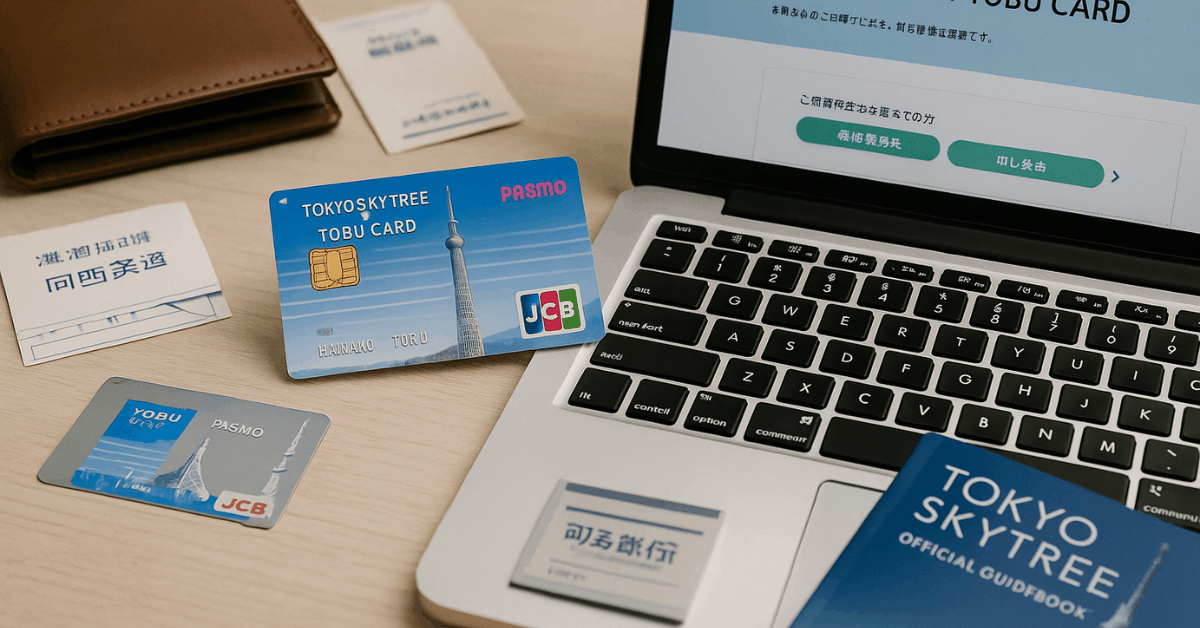
Integrated Credit Option: Tokyo Skytree Tobu Card Pasmo
Frequent users of Tobu Railway or Tokyo Skytree gain extra convenience and rewards by merging payment, transit, and credit functions into one plastic.
The Tokyo Skytree Tobu Card Pasmo layers a Mastercard network on top of Pasmo auto-charge, allowing one tap for transport and one swipe for worldwide retail.
Heres a Quick Facts:
| Attribute | Detail |
| Issuer | Tobu Card Business Co., Ltd. |
| Annual fee | ¥1,100 after year one (primary), free for family and ETC cards |
| Standard earning rate | 0.5 % Tobu Points on purchases |
| Auto-charge bonus | Additional 0.5 % on every reload |
| Commuter pass payment | 1.5 % points back when the pass resides on the card |
| Interest on instalments | 0 % within set terms |
| Cash advance APR | 17.95 % |
| Late-payment charge | 14.60 % |
Eligibility and Application Steps for the Integrated Card
Anyone aged eighteen or older residing in Japan—student, employee, or homemaker—may apply, provided the principal applicant or spouse earns a steady income.
Parental consent is mandatory for minors. A landline number is preferred for identity confirmation, and missing one could delay approval.
Six-Step Application:
- Navigate to the Tobu Card official site.
- Select Tokyo Skytree Tobu Card Pasmo under Apply for a Card.
- Accept the terms and conditions.
- Enter personal data, address, employment, and contact details.
- Await credit screening; typical decisions arrive within a few days.
- Receive the card by insured post, activate auto-charge online, and start earning points.
The card falls under the retail-affiliated category, which historically approves broader income tiers than bank-branded products.
Rates and Rewards to Budget For
Plan your spending with clarity by noting these core figures:
- Membership cost: First year free, thereafter roughly US$7 annually.
- Point value: One point equals ¥1 when redeemed for Tobu group vouchers.
- Redemption threshold: Exchange begins at 1,000 points.
- Preferred uses: Tobu Department Stores, Tokyo Skytree ticket counters, and partner retailers across the Tobu network.
Those living or commuting beyond Tobu’s ecosystem may find limited value in the voucher-only redemption path.
Advantages and Trade-Offs
Pasmo Card Benefits:
- Single card handles trains, buses, and global shopping, eliminating pocket clutter.
- Auto-charge ends gate delays and earns simultaneous points.
- Family and ETC highway companions ride free of annual charges.
Pasmo Card Limitations:
- Reward redemption remains locked to Tobu-branded stores, narrowing worldwide utility.
- A landline requirement may challenge households relying solely on mobile service.
- Annual fee applies after the promotional year, unlike a standard Pasmo which is deposit-only.
Frequently Asked Questions
You might ask these questions along the way:
- Can foreigners use Pasmo?
Yes. Any visitor can add a digital Pasmo to Apple Wallet or pick up a Suica alternative if a physical card is needed. - Does Pasmo work on JR trains?
Absolutely. Tap on JR lines nationwide except Shinkansen services, which still require separate booking. - How does Pasmo auto-charge help residents?
Running balances never hit zero; the card reloads automatically at preset gates, saving time during peak commutes. - Is Pasmo better than Suica?
Functionality is nearly identical. Choose whichever card you can obtain most easily at your entry point. - What happens after ten years of inactivity?
The card expires. The remaining value is lost unless the holder reactivates it at a service counter before that deadline.
Conclusion
Pick the Pasmo format that fits your stay—digital for visitors, registered plastic for residents, or the Tokyo Skytree Tobu Card Pasmo if Tobu railways anchor your routine.
Keep cash handy for quick reloads, set auto-charge when staying long-term, and monitor point balances so rewards never expire.
Plan ahead, tap with confidence, and move through Japan’s rail labyrinth without the slightest bottleneck.